Regulatory compliance
Saudi Arabia (SFDA), UAE (ESMA), Malaysia (JAKIM), and Indonesia (BPOM) all require Halal certification for imported nutraceuticals. Without a valid Halal certificate from the manufacturer, your shipment will not clear customs.
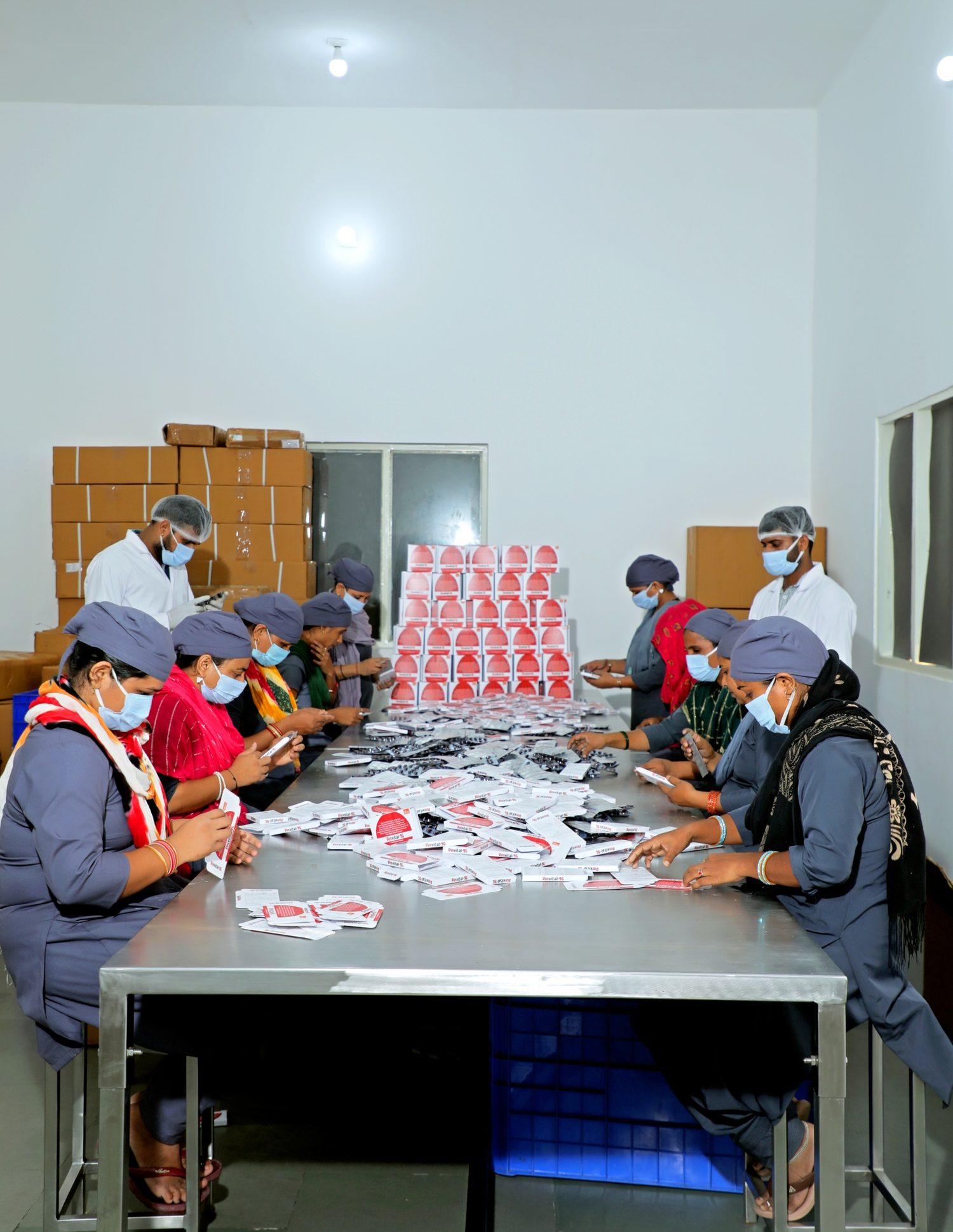
Halal certified nutraceutical & Ayurvedic softgel capsule manufacturer in Jind, Haryana — export-ready production for GCC, Middle East, Africa, and Southeast Asia with complete Halal & Kosher documentation for import compliance.
Admetus Lifesciences is a Halal certified softgel capsule manufacturer operating from Village Anta, Tehsil Safidon, District Jind, Haryana 126112, India. Founded in 2020 by Mr. Anudeep Deswal, our facility produces nutraceutical soft gelatin capsules under Halal certification for export to Muslim-majority markets across the GCC, Middle East, Africa, and Southeast Asia.
For international nutraceutical importers and distributors, Halal certification is not optional — it is a regulatory and commercial requirement. Saudi Arabia's SFDA, the UAE's ESMA, Malaysia's JAKIM, and Indonesia's BPOM all mandate Halal certification for imported food supplements and nutraceuticals. Our facility holds Halal certification alongside WHO-GMP, FSSAI, GMP, and HACCP — giving international buyers a single Halal-compliant, pharma-grade manufacturing source with documented quality systems.
Over 1.9 billion Muslims worldwide represent the fastest-growing consumer segment for nutraceuticals. Halal certification is not just a religious preference — it is a legally mandated import requirement in most GCC, Middle Eastern, and Southeast Asian markets.
Saudi Arabia (SFDA), UAE (ESMA), Malaysia (JAKIM), and Indonesia (BPOM) all require Halal certification for imported nutraceuticals. Without a valid Halal certificate from the manufacturer, your shipment will not clear customs.
Halal certification on softgel packaging is a baseline consumer expectation in GCC and Muslim-majority countries. Brands without visible Halal compliance lose shelf placement and buyer confidence.
Softgel capsules are gelatin-based products — the single most Halal-sensitive ingredient category. Buyers and regulators specifically scrutinize gelatin source, slaughter method, and cross-contamination controls for soft gelatin capsules.
The global Halal nutraceutical market exceeds USD 50 billion and is growing at 8-12% annually. GCC countries, Indonesia, Malaysia, Turkey, and African markets are driving demand for Halal-certified supplements from Indian manufacturers.
Every batch of bovine gelatin used at Admetus Lifesciences is sourced from Halal-certified abattoirs with full traceability documentation. Gelatin supplier certificates, species declarations, and Halal slaughter attestations are maintained per batch and made available to importers on request.
Our Jind facility follows strict Halal manufacturing SOPs — from raw material intake through encapsulation, drying, and packing. Cross-contamination controls ensure that Halal production runs are segregated with documented line clearance and cleaning validation between batches.
We issue Halal certificates, ingredient source declarations, gelatin species attestations, and batch-level Halal compliance letters — the full documentation stack that GCC customs authorities and SFDA/ESMA/BPOM regulators require for import clearance.
Our Halal certification sits alongside WHO-GMP, FSSAI, GMP, and HACCP certifications on the same production site. International buyers get a single-source manufacturer that satisfies both Halal compliance and pharmaceutical-grade quality standards simultaneously.
UAE, Saudi Arabia, Qatar, Oman, Kuwait, Bahrain
SFDA (Saudi), ESMA (UAE), and individual GCC member-state regulatory requirements supported. Halal certification is mandatory for all nutraceutical imports across the GCC bloc.
Kenya, Nigeria, Ghana, Tanzania, Ethiopia, Egypt
Growing demand for Halal-certified nutraceuticals across both Muslim-majority and multi-faith African markets. We provide NAFDAC (Nigeria), PPB (Kenya), and FDA Ghana documentation alongside Halal certificates.
Malaysia, Indonesia, Brunei
JAKIM (Malaysia) and BPOM/MUI (Indonesia) require Halal certification for all imported nutraceutical and food supplement products. Our documentation is structured to support these regulatory frameworks.
Uzbekistan, Kazakhstan, Turkmenistan, Kyrgyzstan, Tajikistan
Emerging nutraceutical markets with growing Halal import requirements. Our export documentation supports Central Asian regulatory submissions.
Facility-level Halal certification from a recognized Indian Halal certification body, valid for the production site and listed product categories.
Per-shipment attestation confirming that the specific production batch was manufactured under Halal protocols with Halal-certified raw materials.
Species identification (bovine), abattoir Halal certification, and traceability documentation for the gelatin used in the specific batch.
Complete analytical report per batch — assay, dissolution, weight variation, microbial limits, heavy metals — issued by our in-house QC laboratory.
Government-issued certificate confirming that the products are freely sold in the Indian domestic market — required by most importing countries.
Product registration support documents formatted for SFDA (Saudi Arabia), ESMA (UAE), NAFDAC (Nigeria), BPOM (Indonesia), and other national regulators.
All documentation is prepared in English and can be notarized, apostilled, or embassy-attested as required by the destination country. For GCC markets, we routinely provide documentation formatted for SFDA and ESMA product registration submissions. Contact us at [email protected] to request a sample documentation package.
Yes. Our manufacturing facility at Village Anta, Tehsil Safidon, District Jind, Haryana 126112 holds Halal certification alongside WHO-GMP, FSSAI, GMP, and HACCP certifications. The Halal certificate covers our softgel capsule production lines and is renewed annually. Certificate copies are provided to all qualified business inquiries.
We use bovine gelatin sourced exclusively from Halal-certified abattoirs. Each gelatin supplier provides species declarations, Halal slaughter attestations, and batch traceability documentation. We do not use porcine gelatin at our facility. Gelatin source certificates are available per batch for importer verification.
Yes — we provide a complete Halal documentation package: facility Halal certificate, batch-level Halal compliance letters, gelatin source declarations, Certificate of Analysis (COA), and Free Sale Certificate. This documentation is structured to satisfy customs and regulatory requirements in GCC, Middle East, Africa, and Southeast Asian markets.
We export to all six GCC member states — UAE, Saudi Arabia, Qatar, Oman, Kuwait, and Bahrain. Our export documentation supports SFDA (Saudi Food and Drug Authority) and ESMA (Emirates Authority for Standardization and Metrology) regulatory submissions. We also support exports to non-GCC Middle Eastern markets including Jordan, Iraq, and Lebanon.
Our facility is primarily Halal certified. For buyers requiring Kosher certification, we can discuss requirements on a case-by-case basis — the manufacturing protocols for Halal and Kosher have significant overlap in terms of ingredient sourcing and process controls. Contact us at [email protected] for Kosher-specific inquiries.
MOQs for Halal certified softgel production are flexible and depend on the formulation, capsule size, and packaging configuration. We support pilot runs for market testing as well as full-scale production for established distributors. Specific MOQ and pricing for your order is confirmed within 48 hours of inquiry.
Our 10+ standard formulations are all available as Halal certified production runs: Cholecalciferol (Vitamin D3) 60,000 IU, Calcitriol + Calcium + K2-7, Omega-3 + Vitamin E, Krill Oil, Ginseng + Astaxanthin Multivitamin, Glutathione + ALA + Grape Seed, Lycopene + Grape Seed Multivitamin, Isoflavones + Calcium + D3, Ginkgo + Tribulus, and Nigella Sativa (Kalonji). Custom Halal formulations are developed on request.
Halal compliance is maintained through a documented system: (1) gelatin and all animal-derived excipients sourced only from Halal-certified suppliers, (2) line clearance and cleaning validation between production runs, (3) ingredient segregation in raw material storage, (4) batch-level traceability from raw material receipt through finished goods dispatch, and (5) annual Halal certification audits by an accredited certification body. Our SOPs are designed so that every production step is auditable against Halal requirements.
Request a Halal softgel manufacturing quote, sample documentation package, or schedule a facility audit at our Jind, Haryana production site.